Practice Problems
Common Sphere Volume Mistakes (And How to Avoid Them)
Review the five most frequent student calculation errors on geometry exams and simple habits to prevent them.
👤
By Administrator
📅
Updated: October 13, 2026
⏱
2 min read
👁
1,327 views
Advertisement
Featured Mathematics Learning Partner
Explore Advanced Geometry & 3D Modeling Tools
Five Most Common Pitfalls
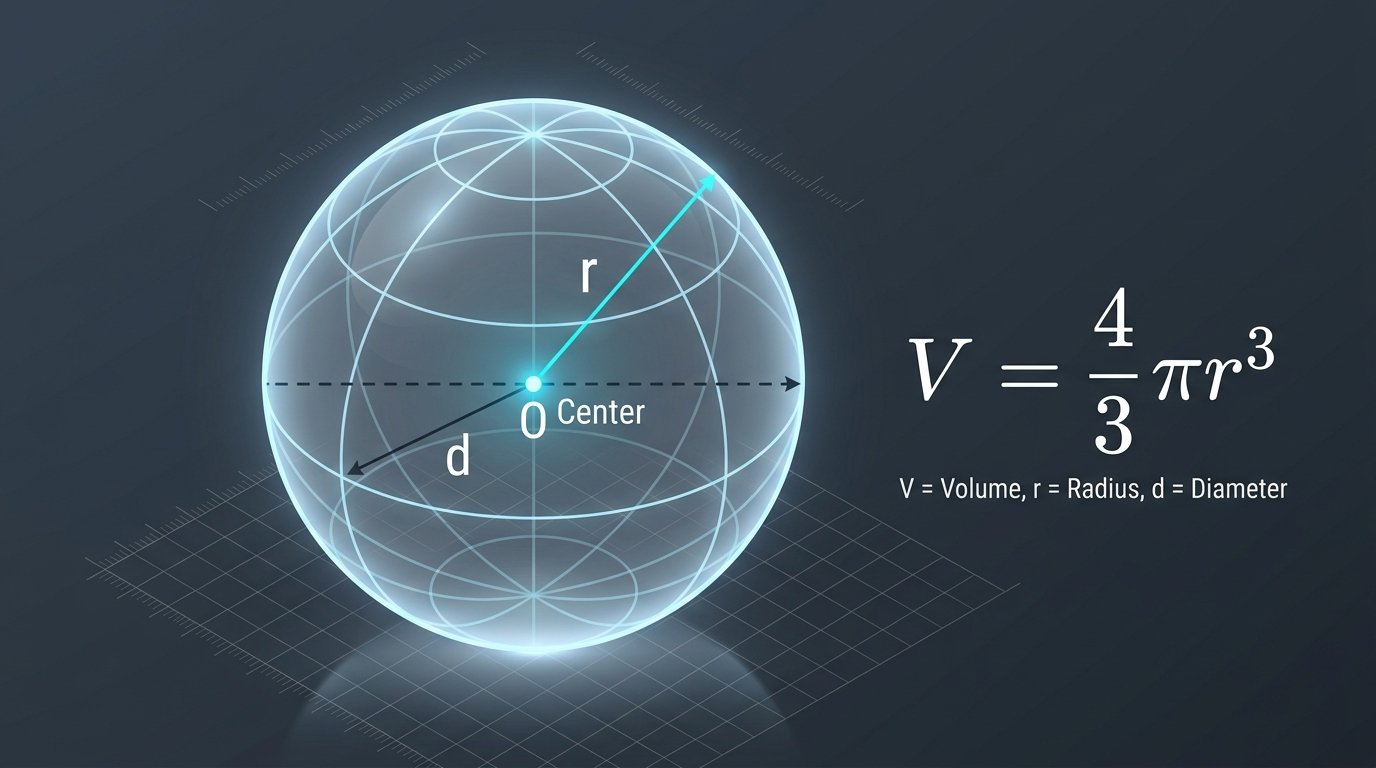
- Using Diameter Instead of Radius: Forgetting to divide diameter by 2 leads to an answer that is
2³ = 8 times too big. - Squaring Instead of Cubing: Confusing the volume formula
r³ with surface area r². - Incorrect Order of Operations: Multiplying
4/3 × r and then cubing the product. You must cube r first! - Mixing Metric Units: Using radius in millimeters while reporting volume in cubic centimeters without converting.
- Writing Square Units for Volume: Always write
cm³ or m³, never cm².